Beluga II makes waves against plastic waste
environmentmarine conservationoceanplastic pollutionmicroplastics
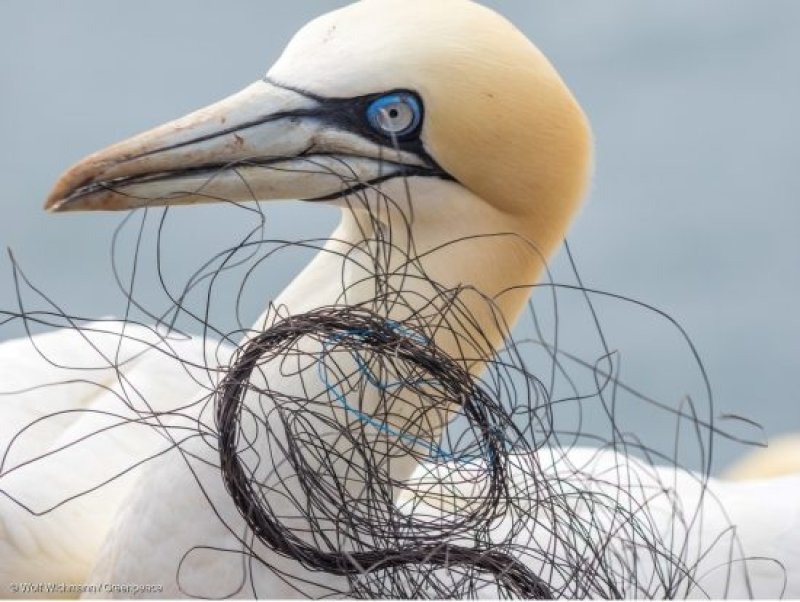
Gannets (northern gannet Morus bassanus) on the "Lummelfelsen" on Heligoland. The birds use plastic waste and parts of fishery nets (Dolly ropes) to build their nests on the rock. Many birds die in the ropes by strangulating themself. (c) Wolf Wichmann / Greenpeace
Since April 16th, the Greenpeace ship Beluga II has been underway on a new journey to publicise the growing threat of plastic trash and microplastics, travelling along German rivers in 15 cities (including Cologne, Frankfurt and Mainz). It will end its tour on June 27th.
On board are activists and volunteers keen to share their knowledge about our marine habitat and the dangers posed by the growing amounts of plastic waste in our oceans. It carries with it an exhibition in which visitors can view a special apparatus that can, among other things, measure the amount of microplastics in the Rhine, Main and Danube Rivers.
"Worldwide – from the Arctic to the Southern Ocean – the marine habitat is suffering due to plastic garbage. Plastic has also reached German rivers, and the North and Baltic Seas," said Greenpeace marine expert Lisa Maria Otte in German. She called on Federal Environment Minister Barbara Hendricks to curb the plastic flood, commenting that bans on plastic bags and microplastics were long overdue.
Up to 13 million tonnes of plastics enter rivers, due to wind, wastewater, storm surges or high tide, and find their way into the sea. It is estimated that at least 150 million tons have already travelled there. The presence of plastic waste in the ocean can cause marine animals to die an agonising death, though strangulation or starvation when the plastic debris is consumed but cannot be digested. Case in point: scientists examining the stomach contents of a sperm whale that had stranded itself in the North Sea coast in Schleswig-Holstein found items like parts of a plastic bucket, the remnants of a net and the plastic cover of a car engine, among other things.
Microplastics in our food chain
Less visible, but nevertheless a massive problem in our oceans, is microplastics waste. These microscopic plastic particles are used in products like cosmetics and toothpaste, and find their way in our waterways and rivers, and eventually end up into the ocean. Microplastics are also created when discarded plastic products in the oceans degrade into smaller particles.
Today, microplastic is regularly found in the stomachs of various fish species, clams or shrimp. "Plastic trash ends up not only in nature but also in our food. Despite scientific studies, no one can say for certain how much plastic ends up on our plates and what effect it has," said Otte.
The annual consumption of plastic of a person living in Western Europe is 136 kilogram’s, which is three times higher than the global average. Two-thirds of Europe's plastic consumption can be attributed to five countries, with Germany in the lead at nearly 25 percent, followed by Italy, France, Great Britain and Spain.
The Beluga II's route for the exhibition.
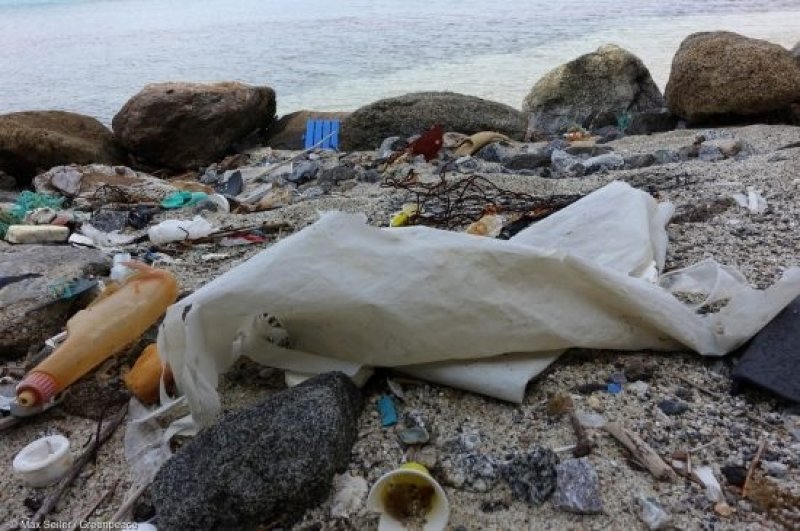
Plastic waste on a beach in Italy near Pizzo. (c) Max Seiler / Greenpeace
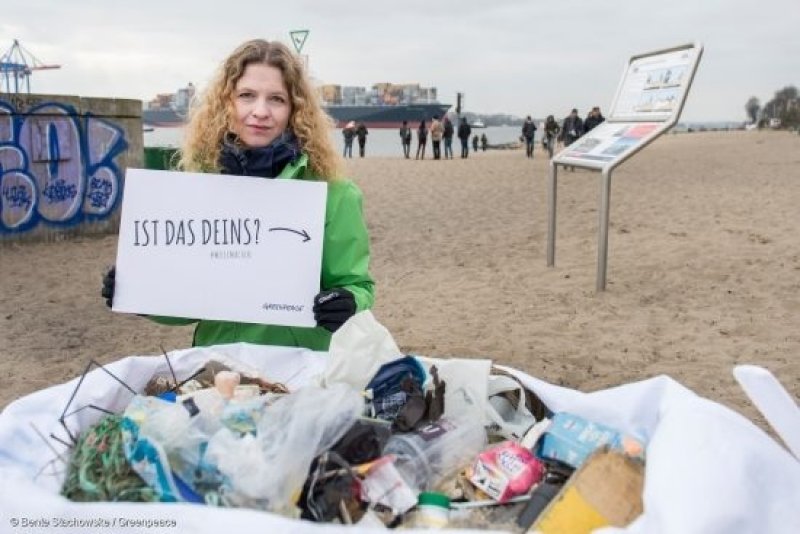
Group Action Day (GAT) on oceans pollution. Members of Greenpeace groups protest in 62 cities in Germany against the pollution of the oceans. The volunteers collecting plastic and other waste on river banks and beaches. (c) Bente Stachowske / Greenpeace
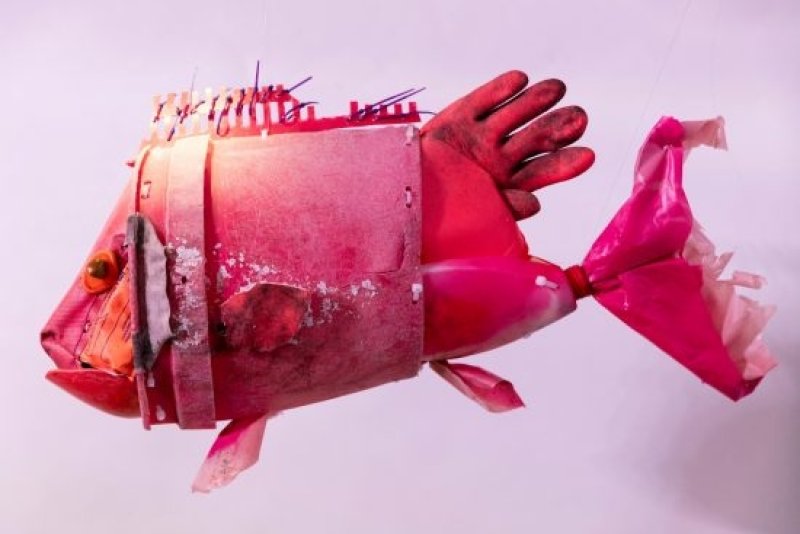
Greenpeace ship Beluga II starts a river tour for the oceans in Muenster. On board are marine creatures made out of plastic waste. Visitors are invited to come on