Arctic microalgae are survivalists
environmentmarine lifeclimate changearcticmicroalgae
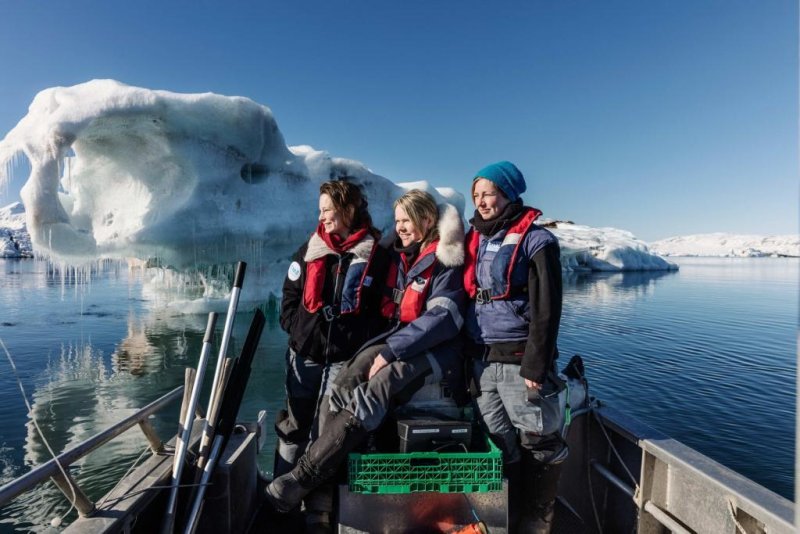
AWI biologists sample the Kongsfjord (Spitzbergen)
(c) Alfred-Wegener-Institut / Paolo Verzone
Microalgae communities in coastal waters remain productive under variable environmental conditions They are the basis of the Arctic food web - and extremely resilient: as the water becomes more acidic and the light or temperatures change, various Arctic microalgae communities seem to maintain their productivity and species composition. This is the result of a study by researchers from the Alfred Wegener Institute, which they have published together with Canadian colleagues online in the journal Nature Climate Change. However, whether the food sources of seals, whales and different fish species in the Arctic can adapt to global changes remains to be explored. Sometimes permanent darkness under meter-thick ice, sometimes 24 hours of daylight; sometimes clear, salty seawater, sometimes murky fresh water from rivers; and all under freezing temperatures: microalgae in Arctic coastal waters are exposed to extreme and highly variable environmental conditions. What big challenges can be an advantage in times of global change. Because this arctic phytoplankton has adapted in the course of evolution to variable environmental conditions. This may explain why some microalgae communities are better able to adapt to global change than communities from regions with more stable environmental conditions. We were able to show that some microalgae are the most important arctic primary producers with high resistance. For example, they are less responsive to ocean acidification than we know from communities in the Southern Ocean or temperate regions ," says biologist Dr. Clara Hoppe from the Alfred Wegener Institute, Helmholtz Center for Polar and Marine Research (AWI). She had experimented with natural phytoplankton communities to change temperature, light regime and pH, and determined the productivity of microalgae. The oceans are acidifying because the burning of fossil fuels releases more carbon dioxide into the atmosphere. In the water, the CO2 reacts to carbonic acid and reduces its pH, which, for example, at the cellular level can influence the metabolism and thus the productivity of organisms. In nine out of ten experimental approaches, productivity remained similar. Only in the experiment with the lowest temperature of 1.8 degrees Celsius did increasing acidification result in decreasing productivity. At the other experimental temperatures between 3 to 8 degrees Celsius, ocean acidification had no measurable effects for the one to three-week experiments. " We conclude that the microalgae can buffer the higher levels of protons associated with decreasing pH as long as the temperatures remain within the right limits, " the authors report in the study. The overall ability of coastal zone phytoplankton to remain productive even under widely varying environmental conditions leads the scientific team back to various mechanisms. On the one hand, the individual microalgae seem to be able to handle different environmental conditions very flexibly, as the AWI team was able to show in further laboratory experiments. On the other hand, many diatom species form spores that can survive several years on the seabed. If the environmental conditions are favourable for certain spores, the microalgae develop and can form plankton blooms. Thus, there is a sort of seed bank with high intra- and inter-species diversity, which gives algae species or strains that cope particularly well with many environmental combinations. Primary production in the Arctic is an important ecosystem service from which increasingly commercially important fishing grounds will depend. We were able to show that in the laboratory test the producers are surprisingly resistant to the ocean acidification expected by the end of the century - good news! " Clara Hoppe is pleased. Nevertheless, it is important to understand the limitations and costs of this resistance, to which their study makes an important contribution. Whether the results allows making statements for the complex food web in nature remains to be investigated. Link zur studie: https://www.nature.com/articles/s41558-018-0142-9
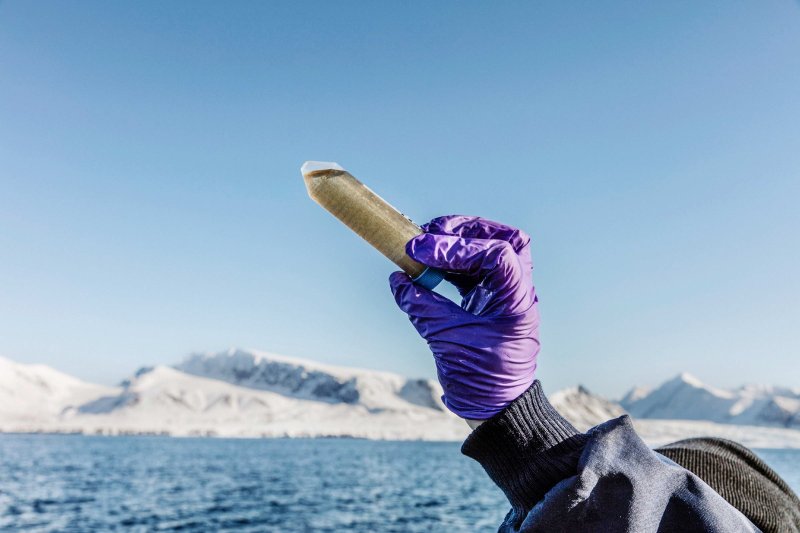
AWI biologists sample the Kongsfjord (Spitzbergen)
(c) Alfred-Wegener-Institut / Paolo Verzone
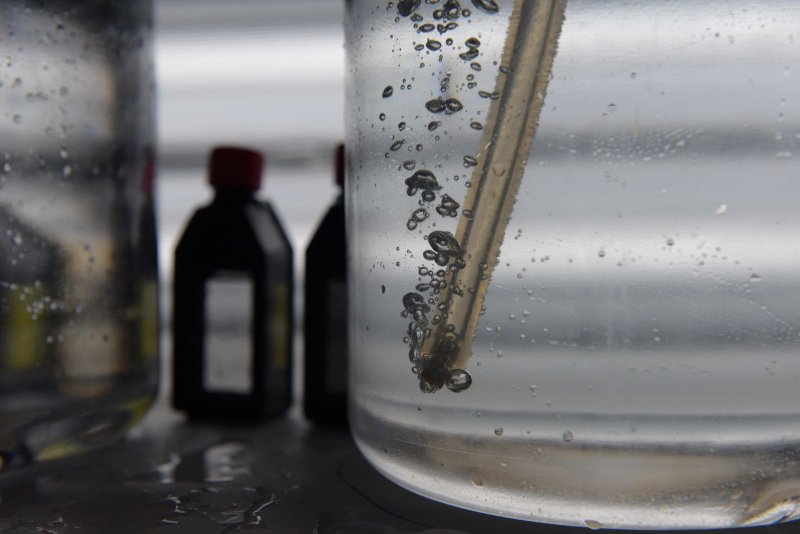
Laboratory work at AWIPEV research station in Ny-Ålesund, Spitzbergen.
(c) Alfred-Wegener-Institut / Rene Bürgi