Greenpeace cleans up beaches of Spitsbergen
environmentmarine conservationoceanplastic pollutionarctic
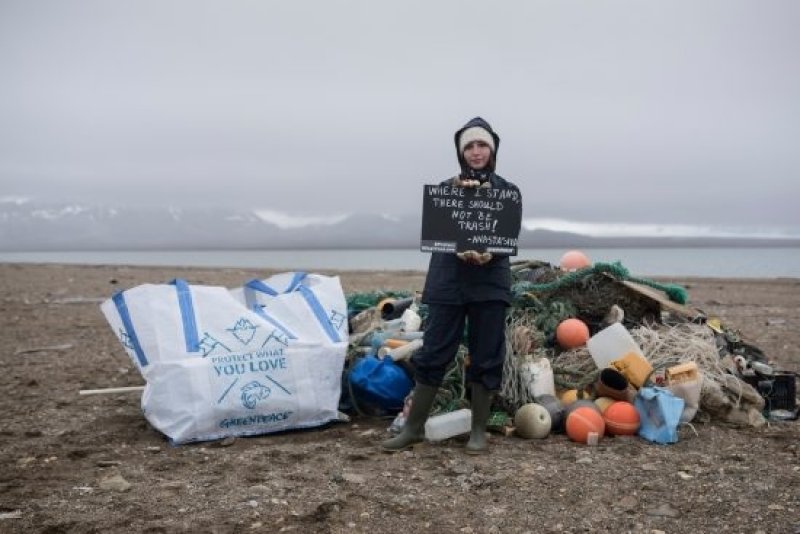
A message to the Norwegian government in front of a pile of garbage collected from a beach at Sarstangen, the west coast of Svalbard. According to the Governor of Svalbard, approximately 80 percent of the trash that ends up on the beaches of Svalbard orig (c) Christian Aslund
Remote places no longer untouched by trash
Greenpeace activists have picked up an assortment of oceanic trash that have washed up on the beaches of the Arctic Svalbard. Amongst their bounty included fishing nets, buoys and other plastic waste from fisheries.
In doing so, the organisation has highlighted the worldwide problem of trash in the oceans, even in the most remote regions of the world. "The Arctic is no longer as untouched as we imagine it," said Larissa Beumer in German. She is an Arctic researcher at Greenpeace in Hamburg.
Greenpeace activists are currently on board the ship Arctic Sunrise to draw attention to the effects of fishing with bottom trawls in the Arctic waters. Due to the decline of sea ice, the waterways are expanded, thus allowing industrial fishing fleets to advance farther north. These newly-uncovered areas are not protected by law. However, companies like Iglo, McDonald’s and some large fishing and commercial companies signed an agreement not to initiate cod fishing in areas of the Barents Sea that were previously covered by ice (see also: taucher.net/diveinside-major_companies_say_no_to_cod_fishing ).
Nevertheless, Greenpeace is calling for a marine reserve to be established around the areas surrounding the Norwegian Svalbard.
Beumer reiterated that the Norwegian government needed to stop the spread of industrial fishing in the previously untouched areas, and this would also cut down on the problem of littering in the sensitive region.
In addition, wind and ocean currents transport oceanic trash to this remote region. According to the Governor of Svalbard, about 80 percent of the trash that wash up on its beaches comes from industrial fishing. Annually, about 12.7 million tons of plastic waste enters the ocean, but only an average of 18 percent of this comes from fisheries.
Arctic wildlife suffer consequences of trash
Animals like polar bears, reindeer and seals can get entangled in fishing nets that have been lost or discarded into the oceans and die an agonising death. Many seabirds are also affected by ocean litter. For example, researchers have found plastic waste in the stomachs of nearly 90 percent of the fulmars in their study. This comes about when the seabirds eat fish that have consumed microplastics found in the ocean. The unique nature of Arctic animals makes them particularly vulnerable to the toxic substances that accumulate in microplastics.
More information: www.greenpeace.de
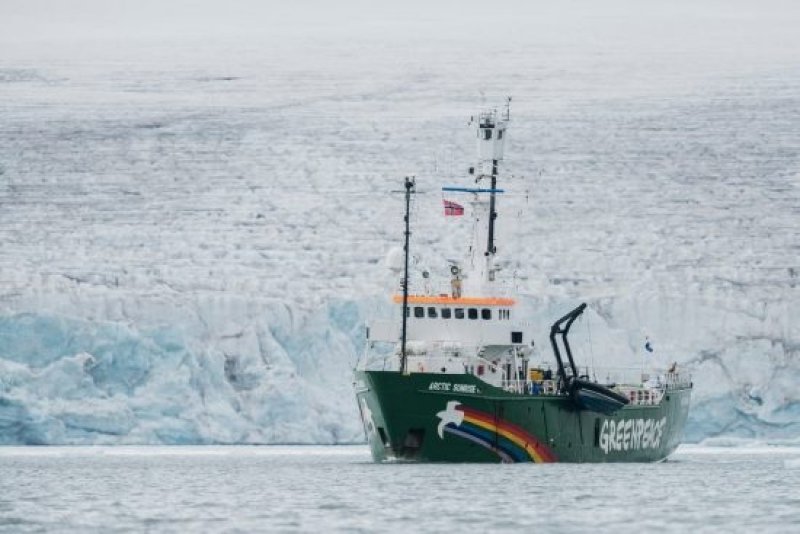
The Greenpeace ship the Arctic Sunrise in front of the glacier Borebreen on Oscar II Land, Svalbard. (c) Christian Aslund

The crew from the Greenpeace ship the Arctic Sunrise collecting garbage found on the beach at Sarstangen on Prince Carls Forland. (c) Christian Aslund
Este artigo foi traduzido automaticamente e pode conter pequenas imprecisões; em caso de dúvida, consulte a versão original em Inglês.