Baby fish less stressed when large predators are around
environmentmarine lifemarine conservationcoral reef
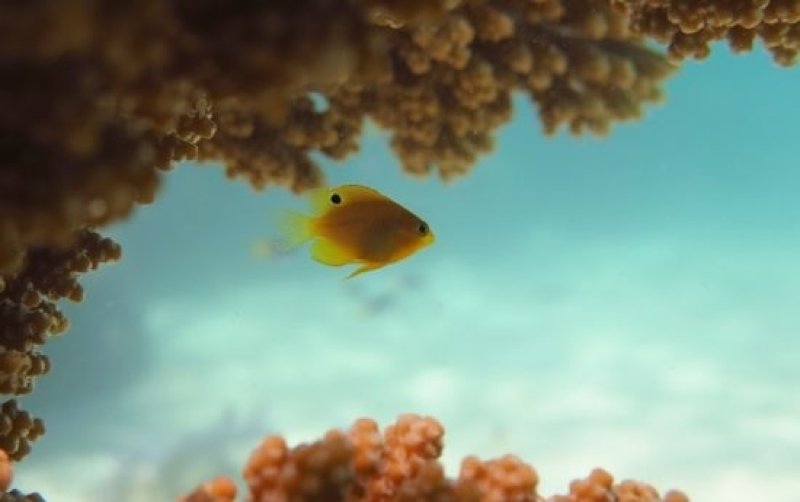
Baby Damselfish (c) MM.Palacios
Stress levels in baby fish can be reduced by slightly more than one-third in the presence of large predatory fish, as the latter would scare off medium-sized predators known as mesopredators.
This was the findings of a study by researchers at the ARC Centre of Excellence for Coral Reef Studies at James Cook University and the University of Glasgow, published recently in the Journal of Animal Ecology.
Elaborating on this, lead author Maria del Mar Palacios said, "Previous studies have proven that the sight of large predators can reduce the activity of mesopredators. But our study is the first to show that such behavioural control on mesopredators is strong enough to indirectly allow baby fish to reduce stress levels by more than 35 percent."
In their research, baby damselfish were exposed to sensory cues (both visual and scent-based) from small and large predators. Their behaviour and oxygen uptake were carefully recorded, to be used as an indicator of the stress levels of the fish. The results then allowed the scientists to understand the cascading effects of predators within the food chain on baby fish in the Great Barrier Reef.
The scientists discovered that the baby damselfish became very frightened when they were exposed to the sensory cues of only the mesopredators. However, when the damselfish detected the "presence" of a large predator, their physiological stress vanished. Much like humans, it is expected that this reduction in stress would boost their fitness levels and well-being. Subsequently, this would allow them to invest more energy in food consumption and growth.
The researchers warned that the overexploitation of large marine carnivores may lead to more smaller predators in the ecosystem, causing stress and increased mortality in the population of baby fish.
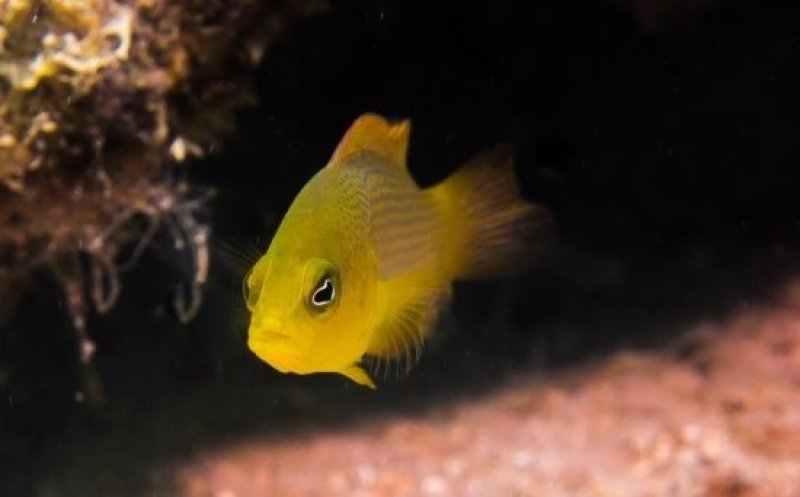
Juvenile Dottyback (c) CE. Mirbach
Este artigo foi traduzido automaticamente e pode conter pequenas imprecisões; em caso de dúvida, consulte a versão original em Inglês.