Scientists discover new facts about colored organic matter in deep ocean
environmentmarine scienceoceanographycarbon cyclepicocyanobacteria
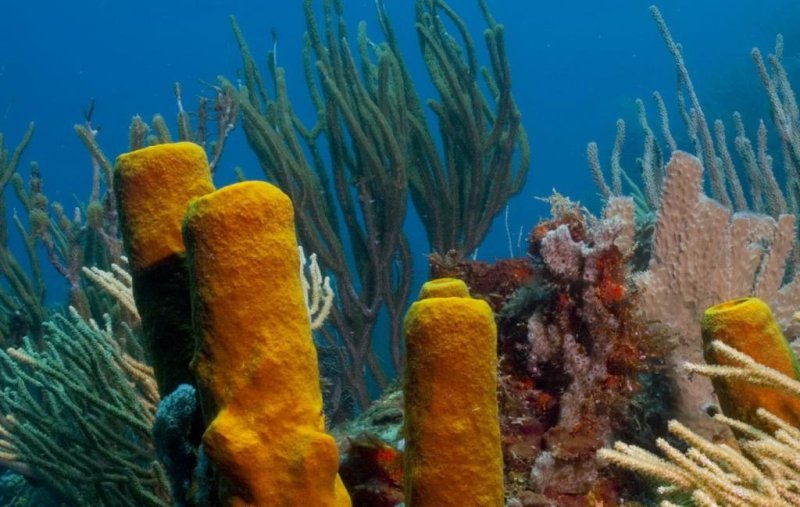
About half of atmospheric carbon dioxide is fixed by ocean's phytoplankton (c) Dominik Vögtli
Picocyanobacteria found to be major cause of it
About half of atmospheric carbon dioxide is fixed by ocean's
phytoplankton, mainly picocyanobacteria, through photosynthesis.
Picocyanobacteria are unicellular microorganisms that are widely distributed in freshwater and marine environments.
A large portion of biologically fixed carbon is formed by these phytoplankton at the sea surface and then transported to the deep ocean. But it is still unclear how colored dissolved organic matter (which originates from plant detritus on land or at sea) ends up in the deep ocean.
"We are still at the beginning of understanding the marine carbon cycle," said Michael Gonsior, a chemist at the University of Maryland Center for Environmental Science (UMCES). He added that the sources of specific chemicals in the ocean was not yet well defined as it was a vast and complex system.
In the deep ocean, dissolved organic matter displays a fluorescence signal similar to the humic-like fluorescence found in a river or stream. Many scientists have hypothesized that this material is derived
from rivers and streams that carry it off the land and into the ocean.
However, there is growing evidence that there are marine sources of this material, which may explain the majority of this colored material found in the deep ocean.
UMCES researchers Gonsior and Feng Chen took the first step in characterizing the organic matter released from marine picocyanobacteria.
"Our original plan was to understand the fate of organic carbon released from viral lysis of picocyanobacteria," said Chen, a molecular biologist.
For the first time, they have shown that cultured picocyanobacteria – Synechococcus and Prochlorococcus – release fluorescent components that closely match these typical fluorescent signals found in oceanic environments.
Both Synechococus and Prochlorocccos are the most abundant carbon fixers in the ocean. It is predicted that picocyanobacteria, which prefer warmer temperatures, may increase 10 to 20 percent by the end of the century if ocean warming continues.
"When you sail on the blue ocean, a lot of picocyanbacteria are working there. They turn carbon dioxide into organic carbon and are likely responsible for some of the deep ocean color coming from organic matter," said Gonsior.
Gonsior and Chen studied the strain of Synechococus and stumbled upon the discovery. They planned to measure the fate of dissolved organic matter by examining the molecular composition using state-of-the-art mass spectrometry undertaken in collaboration with Professor Philippe Schmitt-Kopplin at the Helmholtz Center for Environmental Health in Munich, Germany.
Many biological compounds glow when excited with light. Gonsior conducted optical analyses that measured the absorbance and fluorescence.
"When I saw the first fluorescence measurements of these samples, it was very clear what was going on. We found those picocyanobacteria were releasing fluorescent organic matter, which mimics that what we see in both the deep ocean, but also in rivers and streams," said Gonsior.
"To me, this is exciting because you have such abundant photosynthetic cyanobacteria in the ocean. We’ve known that for a long time but nobody made a connection between picocyanobacteria and fluorescent dissolved organic matter," said Chen.
Source of information
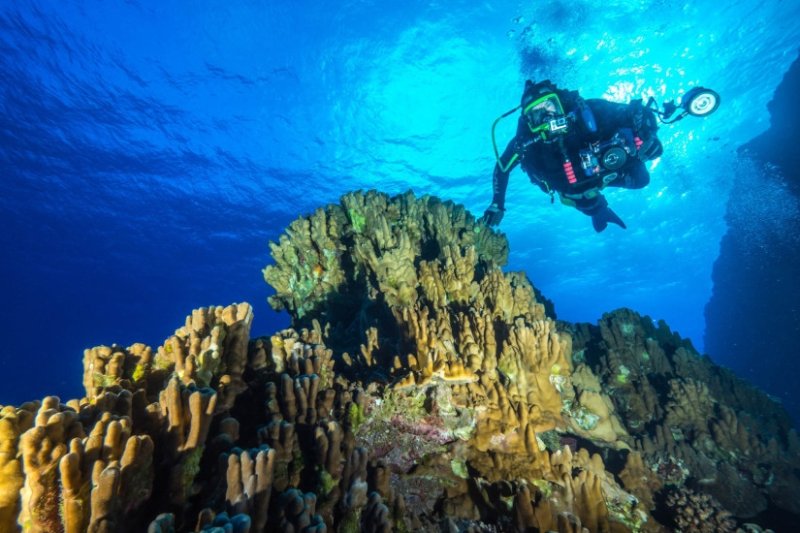
About half of atmospheric carbon dioxide is fixed by ocean's phytoplankton (c) Dominik Vögtli
تمت ترجمة هذه المقالة تلقائيًا وقد تحتوي على أخطاء طفيفة؛ يرجى الرجوع إلى النسخة الإنجليزية الأصلية في حالة الشك.