Corals can influence microbes in their environment
coral reefsenvironmentmarine lifeoceanmicrobiology
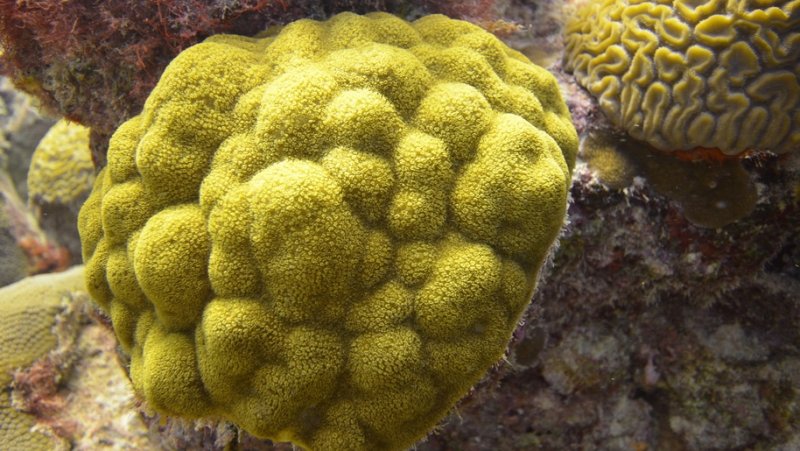
In order to better understand how corals are interacting with microbes in surrounding reef waters, the researchers set up aquaria-based experiments using colonies of the coral P. astreoides. (c) Stacy Peltier, Bermuda Institute of Ocean Sciences
Researchers have discovered that despite their static nature, corals do
exert some influence on the microbes in the environment around them. This was revealed in a paper recently published in the Limnology and Oceanography journal.
Although it has been known that microorganisms in the water influence
corals in a variety of ways, this study reveals that this interaction
actually goes both ways. The study was conducted by researchers from
the Woods Hole Oceanographic Institution (WHOI), Bermuda Institute of
Ocean Sciences (BIOS) and University of California, Santa Barbara
(UCSB)
We’ve known that marine microbes play major roles in moving nutrients
and recycling matter into forms that are more usable to the corals. But
this study demonstrates for the first time that corals are having some
control on the production of microbes around them, and that the corals
are using that to benefit their own growth, " said WHOI microbiologist
Amy Apprill.
Essentially, the corals release organic matter and nutrients which
planktonic bacteria known as picoplankton feed on — then they
selectively feed on these specific types of bacteria.
In their research, the scientists set up an aquaria-based experiment
using nine tanks filled with seawater for 12 days. Their objective was
to track the population of microbes in the seawater. Three tanks were
used as controls and were left alone. For three other tanks, they added
mucus from the P. astreoides coral (taken from three Bermudian reefs).
Corals secrete mucus, which supports an active community of microbes.
For the three remaining tanks, corals were introduced and then removed.
The scientists observed that the microbes in these tanks were
drastically reduced; particularly affected were the Rhodobacteraceae,
Synechococcus and SAR11 bacteria, which were the most abundant groups
in the ocean.
When the corals were removed from these tanks, the population of
microbes subsequently increased as they were able to replenish
themselves. This was accompanied by extremely fast rates of microbial
growth. The growth rates were quite high, especially in the case of SAR11,
which was one of the fastest rates of growth ever documented, " said
Apprill.
" It suggests that the microbes are growing on something that the corals
leave behind in the tank. For the first time, we’re observing important
influences that the corals are having on the total surrounding
microbial community, " she added.
Another observation made during the experiment was that in the tank
with corals, there was remineralisation of nitrogen in the water. This
is similar to what takes place in environments with healthy coral
reefs: microbes convert ammonia, a toxic waste product produced by most
animals. into less toxic substances like nitrate, and this leads to
increased nitrogen levels in the water. Microbiologist at UCSB and co-author Alyson Santoro said of the
detoxifying process: "Until now, it wasn’t known exactly where the
process was occurring, whether it was happening in the sand or in the
water column or in association with corals. This study shows that this
detoxifying process is directly and physically associated with the
corals." Since there were no drastic changes observed in the tanks containing
just the coral’s mucus, Apprill concluded that it was " not just the
mucus that’s causing the microbes in the water to become more active.
It’s actually what the coral is releasing, which is still an undefined
group of compounds. Co-author Rachel Parsons, a microbial oceanographer at BIOS concluded
that " corals do in fact influence the picoplankton community by
selecting specific lineages of picoplankton for removal and also by
potentially using the complex carbon compounds excreted by the coral to
promote the growth of these lineages. "
As coral reefs are currently in decline due to climate change and ocean
acidification, the researchers asserted that there was an urgent need
to find out how specific coral picoplankton interactions contribute to
the coral reef ecosystems.
Full Study: Multifaceted impacts of the stony coral Porites astreoides on
picoplankton abundance and community composition
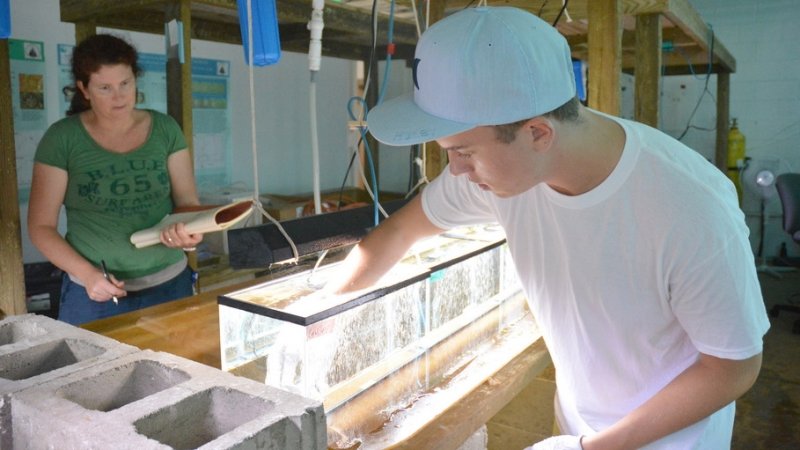
Sean McNally and his mentor at the Bermuda Institute of Ocean Sciences, Rachel Parsons, place corals in the tanks at the beginning of the experiment.
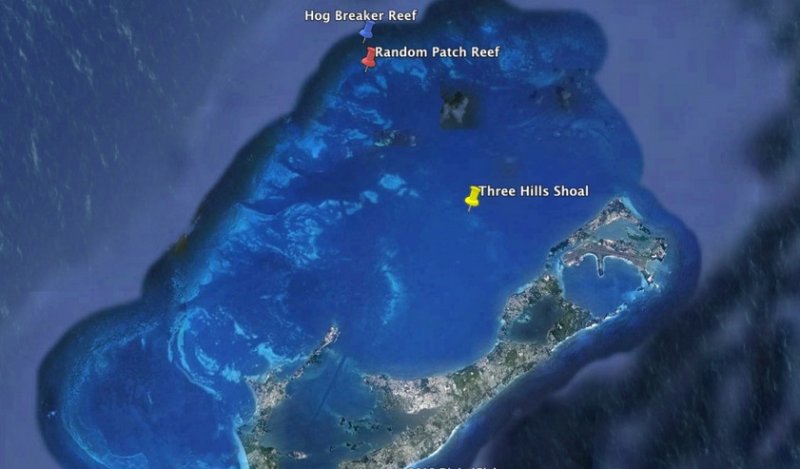
For the tank experiments, colonies of the coral P. astreoides were obtained from three Bermudian reefs. (c) Graphics by DigitalGlobe(2013), Data: SIO, NOAA, U.S.Navy, NGA, GEBCO
این مقاله به صورت خودکار ترجمه شده است و ممکن است حاوی اشتباهات جزئی باشد؛ در صورت هرگونه شک و تردید، لطفاً به نسخه اصلی انگلیسی مراجعه کنید.