Coral reefs cannot keep up with sea level rise
environmentmarine conservationcoral reefclimate changesea level rise
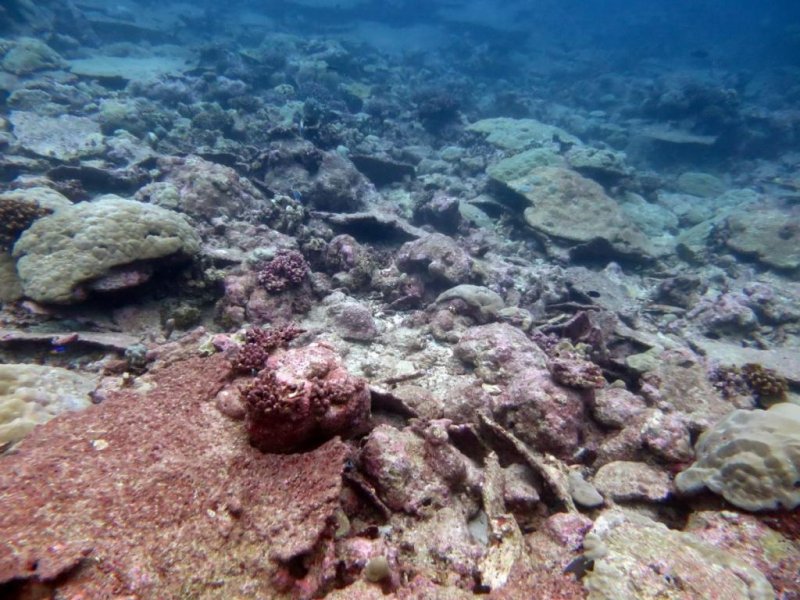
Dead and eroding section of reef in Chagos (Indian Ocean). Image taken after the bleaching event of 2016.
(c) Prof Chris Perry, University of Exete
If the reefs are unable to keep up with with rising sea levels, the coasts are threatened Many coral reefs will not be able to grow fast enough to keep up with rising sea levels, leaving tropical shores and islands at greater risk of erosion and flooding. An international team led by scientists from the University of Exeter, the Royal Netherlands Institute for Sea Research (NIOZ), Lancaster University and the Australian Research Council's Center for Excellence in Coral Reef Studies (Coral CoE) compared the maximum growth rates of coral reefs with the predicted sea-level rise rates and found that many reefs cannot keep up. The researchers have now published their results in a study in the journal Nature. The growth of coral reefs is influenced by the number and type of corals living on the reef surface. This growth is hampered by the combination of coral disease, deterioration of water quality and fishing pressure, and the serious impact of "coral bleaching" as a result of climate change. "For many reefs in the Caribbean and Indian Ocean, growth rates are slowing down due to coral reef degradation. Meanwhile, sea level rise rates are rising - and our findings suggest the reefs cannot keep up, meaning that the water depths will be above most reefs increase dramatically in this century," says lead author Professor Chris Perry of the University of Exeter. "Even under favourable climate change prediction scenarios, only about 3% of Indian Ocean reefs will be able to withstand local sea level rise, while most reefs will experience more than half a meter of water depth increase with persistently high emissions", adds Dr. Aimée Slangen of the NIOZ. "This is crucial as reefs play a key role in natural marine defense by limiting the energy burden of coastal waves and efforts to combat climate change must therefore be accompanied by regulation of fisheries and water quality in order to prevent widespread desertification prevent this century," said Professor Nick Graham of Lancaster University, co-author of the study. The researchers calculated growth rates for more than 200 tropical reefs in the Western Atlantic and Indian Ocean. "We need to limit global greenhouse gas emissions and our predictions, even under the best scenarios, suggest that reef flooding will put coastal regions at significant risk from coastal changes by 2100. Healthier coral reefs will reduce flooding with seawater." says Professor Peter Mumby, co-author of Coral CoE. More Information: https://www.coralcoe.org.au
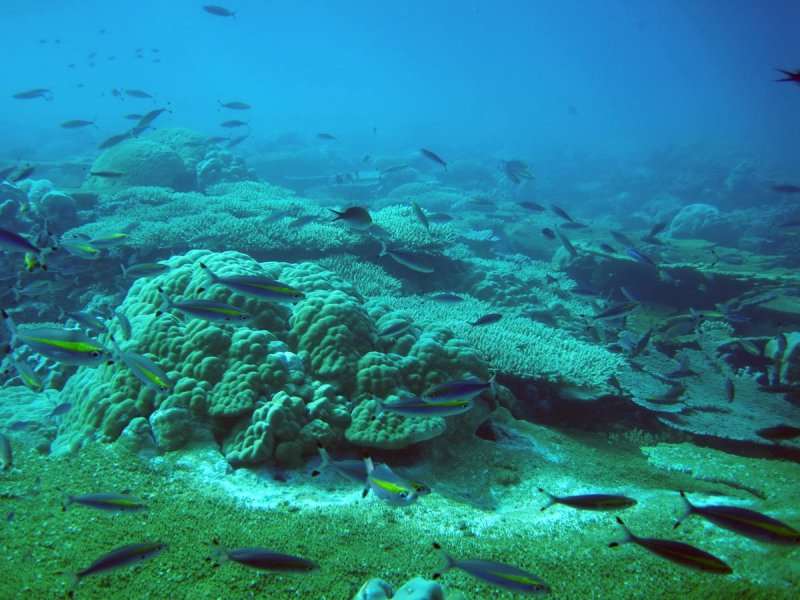
Healthy and actively growing reef with high coral cover on a reef in Chagos (Indian Ocean). Image taken prior to the bleaching event of 2016.
(c) Prof Chris Perry, University of Exeter
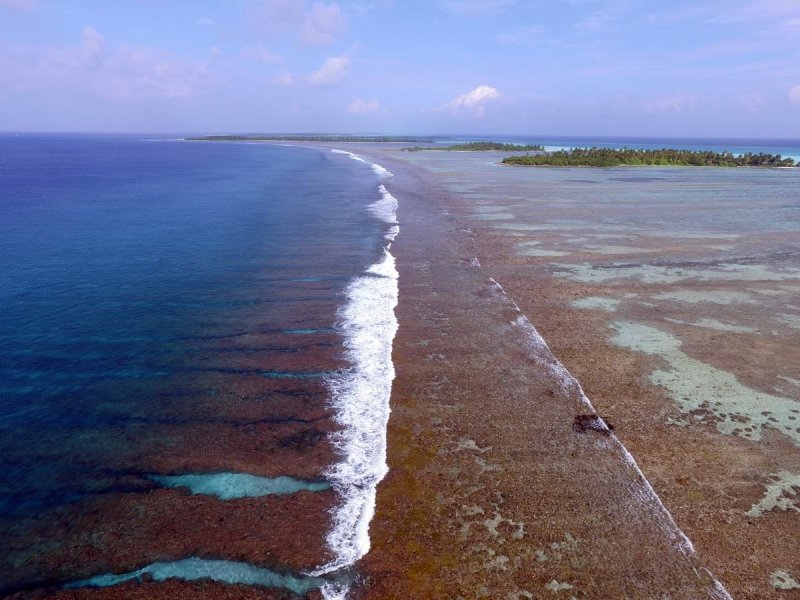
Waves breaking across a reef flat in the southern Maldives. These shallow water reef zones absorb large amounts of wave energy creating lower energy conditions behind.
(c) Prof Chris Perry, University of Exeter
این مقاله به صورت خودکار ترجمه شده است و ممکن است حاوی اشتباهات جزئی باشد؛ در صورت هرگونه شک و تردید، لطفاً به نسخه اصلی انگلیسی مراجعه کنید.